

Researchers reviewed the role of elimination diets for children with food allergies in a recent paper published by the Brazilian Society of Pediatrics, Jornal de Pediatria. They also highlighted the importance of a multidisciplinary plan to support each child’s health and growth, as well as their nutrition. Food allergies can have severe symptoms. Medical advice often […]
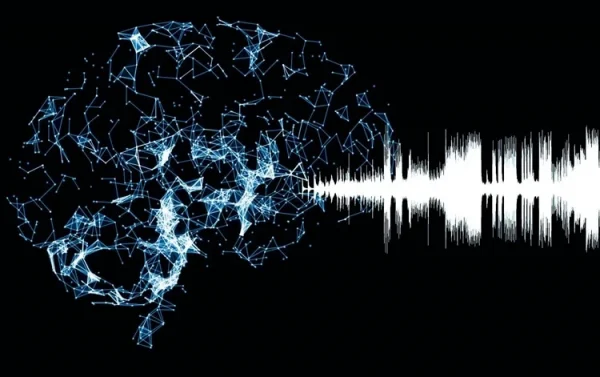
Brain’s pitch: A new study tunes into Mandarin tone control
Researchers investigated the neural basis for lexical tones in native Mandarin speakers in a study published in the journal Nature Communications. They used intracranial recordings. The researchers found that local populations of the bilateral laryngeal motor cortex (LMC) are responsible for pitch dynamics in lexical tones. These local populations encode articulatory kinematics instead of selectively coded […]
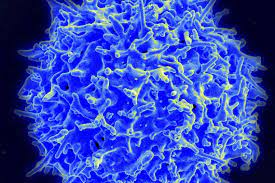
A $13 million NIH grant funds research to rejuvenate the immune system of older adults
Researchers at the University of Arizona Health Sciences have received a grant of $13.1 million from the National Institute on Aging. The money will be used to continue research aimed at rejuvenating older people’s immune systems in order to improve their health throughout their lifespan. Infection, cancer, and certain autoimmune diseases affect older adults in […]

The accuracy of long-term COVID predictions has increased to 78.5% thanks to the discovery of biomarkers.
Researchers tested the hypothesis in a paper that was uploaded to the preprint* server. They hypothesized that dysregulation of the complement cascade could lead to long-term, and biomarkers for this dysregulation might predict the disease’s presence and outcome. Researchers analyzed plasma samples from patients with long COVID and controls who were not affected by the […]

Does slow-wave sleep decrease with age, and is this intra-individual change associated with dementia?
Researchers in a study published by JAMA Neurology investigated whether the proportion of slow-wave sleep decreased as people aged and whether these intra-individual reductions were related to dementia risk. Background A lack of sleep could be a factor in dementia. In animal models, sleep deprivation stimulates amyloid accumulation and tau protein distribution and secretion, which aggregates in […]

Prof Shaun Jackson addresses the Mauritius International Symposium.
The 7th International Symposium of New Frontiers in Cardiovascular Research took place in Mauritius, October 16-17. It brought together experts from around the world to discuss their most recent research findings. Prof Shaun Jackson was invited to speak as a representative of the Heart Research Institute. He is the Director of Cardiovascular Research at the Charles Perkins […]
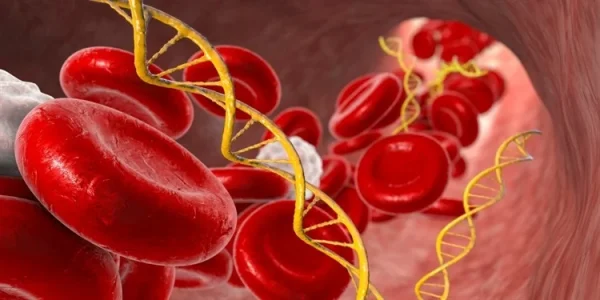
A new blood test can detect cancer early in patients with Li-Fraumeni Syndrome.
Researchers from Canada published a study in Cancer Discovery that tested the use of multimodal liquid biopsies based on cfDNA for early cancer detection among patients with Li-Fraumeni Syndrome. Researchers found that this assay had a higher sensitivity for detection compared to other unimodal tests. It could also detect signals related to cancer before conventional cancer diagnosis. […]

The current jargon used to describe antibiotic resistance is not effective or frightening, according to a study.
Researchers from evaluated the effectiveness of antimicrobial resistance-related terms used in public health communications based on memorability, risk associations, and linguistic characteristics. Background AMR is an increasing healthcare crisis. It caused five million deaths in 2019, and in 2020, it will surpass the number of deaths from the coronavirus (COVID-19). AMR is caused when microorganisms […]
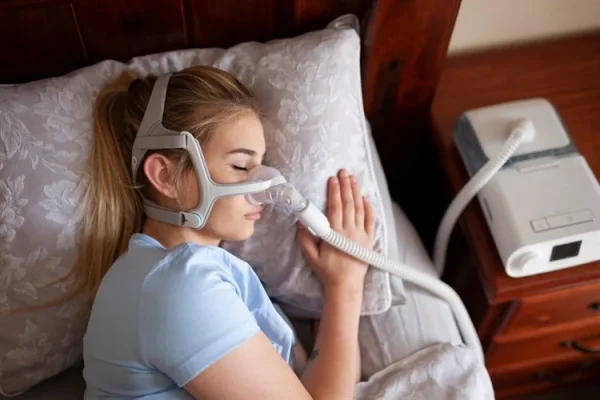
Sleep apnea: the missing link between high cholesterol and Alzheimer’s disease?
Researchers evaluated the relationship between the ‘non-dipper pattern’ of hypertension, obstructive sleeping apnea, and Alzheimer’s Disease (AD) in a review article that was published in the journal Hypertension Research. OSA and non-dipper hypertension In normal circumstances, the blood pressure at night can often drop by 10% compared to daytime levels. This phenomenon is known as ‘dipper […]

Reserve Bank’s massive problems are exposed as rates are set to increase.
Australian households are experiencing one of the toughest financial times in recent history. The twin forces of high rates of inflation and the highest relative rate on record have combined. Mortgage holders could see a silver lining, as the rate rises were at least coming to an end. The latest inflation figures came in much […]