A leading constitutional expert will notify the Australian Electoral Commission that MPs campaigning against Indigenous Voice to Parliament used his quotes in an article arguing against it.
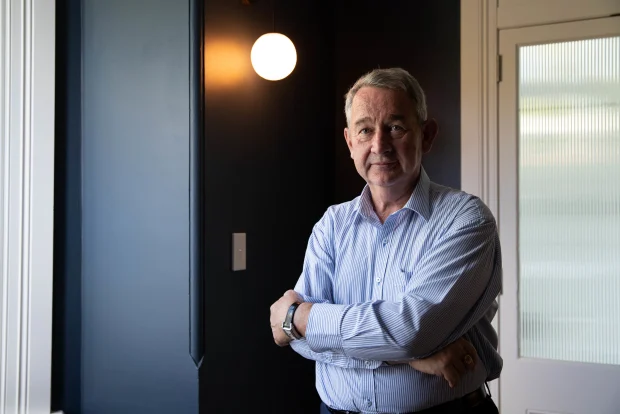
Greg Craven is the former vice-chancellor of the Australian Catholic University and a member of the government’s expert group on constitutional matters. He supports The Voice and the goal to recognize Indigenous peoples within the Constitution.
The official No Case essay, released on Tuesday and will be sent to the voters before the referendum in the fall, quotes Professor Craven as calling the proposal “fatally faulty.”
He told the Australian Financial Review that he had contacted Peter Dutton last week’s office to express his concern over the use of quotes. This was before an essay written by Coalition members in a committee headed by Senators Jacinta Nimpijinpa-Price and Paul Scarr.
This quote was taken from an interview on the radio in March when Professor Craven argued for changes to draft constitutional amendments that Labor had put forward. He also warned the Voice could be sued if it were to advise the executive government.
Since then, he’s argued for the success of a Yes vote in numerous interviews and a long newspaper article.
Critique the draft
No campaigners quoted Professor Craven: “In words of a constitutional lawyer who supports Voice:
“It’s fatally flawed because it retains the full range review of executive actions. The Voice can comment on anything from parking tickets to submarines.
The essay states: “Many lawyers have expressed concerns about its scope. However, their concerns have been simply overlooked.”
Professor Craven described himself as “apoplectic.”
He said: “The thing I find infuriating about this is that for months, it’s been known that I am in favor of the Voice and that would campaign for it.”
“I made this clear during the entire period I criticized the draft. “I made that clear throughout the entire period that I was critiquing the draft.”
“The Coalition and the No side are fully aware of this position.
It is deceptive that they did not clarify that this man was 100% in favor.
He stated that he had yet to hear back from the office of Mr. Dutton and would bring the matter up with the AEC. According to referendum laws, Tom Rogers does not have the power to edit or fact-check the text and is only allowed to publish the information provided by the AEC.
Senator Nampijinpa Price stated that Professor Craven expressed reservations about The Voice and it would be appropriate to share these with voters.
She said that, contrary to the claims made by the No case, it does state that Professor Craven supports the Voice.
I don’t know why anyone with such concerns would support the Yes campaign in the future.
Professor Craven stated that Mr. Dutton initially was open to the Voice but now considers it “equivalent” to bubonic disease.
“It’s not just that they are misleading people on the Yes-side. “There is no acknowledgment that the people on the No-side have had different positions in the past,” said Professor Craven.
Megan Davis, the co-chair of the Uluru Dialogue with Pat Anderson, said that the essay No “repeated the same tired and misinformed arguments from a campaign devoted to maintaining a failed status quo which has always disappointed Australians.”
They said: “This referendum offers an opportunity to bring national unity. The only campaign that is trying to divide us, with its cynical and misleading campaign, is the No campaign.”
Prime Minister Anthony Albanese has also criticized an essay on the No Case released by the AEC along with another similar report on the Yes Case on Tuesday.
He denied the claim of the No party that politicians led the proposal.
Mr. Albanese, a 2SM radio host, said the “constitution” was drafted by Indigenous Australians who met in Uluru for their constitutional convention.
Voting Yes means listening, acknowledging, and using this listening to get better results. “We have significant life expectancy gaps and health, education, and housing outcomes.”