According to a recent study in Proceedings of the National Academy of Sciences, researchers at NYU College of Dentistry’s Pain Research Center developed a gene treatment that treats chronic Pain indirectly by regulating sodium ion channels.
This innovative therapy was tested on cells and animals. It is possible because of the discovery of the exact region where a regulatory protein binds the NaV1.7 ion sodium channel to control its function.
Our study is a significant step in understanding the biology behind the NaV1.7 sodium channel. It can be used to relieve chronic pain, said Rajesh Khanna. He is the director of the NYU Pain Research Center and professor of molecular pathobiology at NYU Dentistry.
Chronic Pain affects approximately a third (33%) of the U.S. populace. Scientists are working to create pain medication that is more effective and safer than opioids.
The sodium ion channel plays a crucial role in the transmission and generation of Pain. They are essential for neurons to communicate with one another. After discovering that people with rare genetic pain disorders were affected by a sodium ion channel called NaV1.7, this channel became a promising treatment target. In some families, mutations in the gene encoding for NaV1.7 allow large amounts of sodium into cells, causing chronic Pain. In some families, mutations blocking NaV1.7 cause a complete absence of Pain.
Scientists have tried for years to develop pain treatment that selectively blocks NaV1.7 but with little success. Khanna’s approach is different: instead of securing NaV1.7 with a protein known as CRMP2, he aimed to regulate the virus indirectly.
“CRMP2 modulates the activity of the sodium ion channels by ‘talking’ to them. This allows more or less sodium in the channel. By blocking the communication between Nav1.7, CRMP2, and their interaction, we can reduce the amount of sodium that enters the drain. The Pain is reduced because the nerves are quieted down.
Khanna’s lab developed a small molecule that regulates Nav1.7 indirectly by targeting CRMP2. The compound is effective in reducing pain in animal and cell models. Studies are ongoing to determine its potential use in humans. But despite its success, the critical question was: why does CRMP2 communicate only with the NaV1.7 ion sodium channel and not the other eight sodium ion channels of the same family?
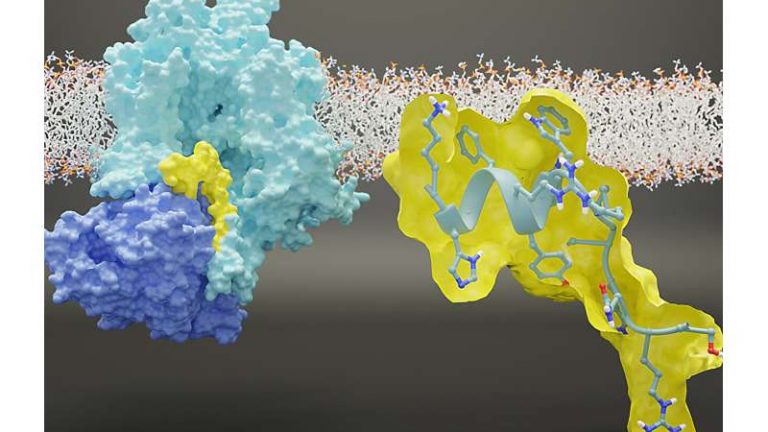
Researchers found that the CRMP2 protein can bind to a -specific region of NaV1.7 to regulate the activity. The researchers learned that the area was specific to NaV1.7 as CRMP2 didn’t readily bind to other sodium channels.
Khanna said, “This made us very excited because, if we removed that piece of the NaV1.7, CRMP2 would lose its regulation.”
Researchers created a peptide corresponding to the channel region where CRMP2 binds NaV1.7 to limit communication. The researchers inserted the peptide in an adenoassociated virus to deliver it directly to neurons and to inhibit NaV1.7. Viruses to deliver genetic materials into cells is an essential approach in gene therapies. It has successfully treated blood disorders, eye diseases, and rare diseases.
The engineered virus has been given to mice who suffer from Pain. This includes sensitivity to heat, cold, or touch and peripheral neuritis caused by chemotherapy. The researchers evaluated the animals after a week or ten days and found that the Pain had been reversed.
Khanna said, “We discovered a way to infect neurons with a virus that contains a tiny piece of genetic material derived from a protein we all have.” This new application of chronic Pain represents the latest in a series of significant developments in gene therapy.
Researchers replicated their findings by inhibiting NaV1.7 in multiple species, including rodents, primates, and humans. This is an encouraging sign, even though more research is needed. It could translate into human treatment.
There is a need for a new treatment for Pain, especially for cancer patients who have chemotherapy-induced Neuropathy. Khanna said the long-term objective is to develop gene therapies to help patients manage these painful conditions better.