Avengers Endgame was not the end of the Marvel Cinematic Universe. Since then, Marvel’s biggest superhero franchise has continued to grow. Marvel, after closing the Infinity Saga (and killing some of its most prominent characters) in 2019, turned to the multiverse. Phase 4 began with a number of films and Disney+ TV series, including WandaVision Shang-Chi and the Legend of the Ten Rings and Black Panther: Wakanda Forever.
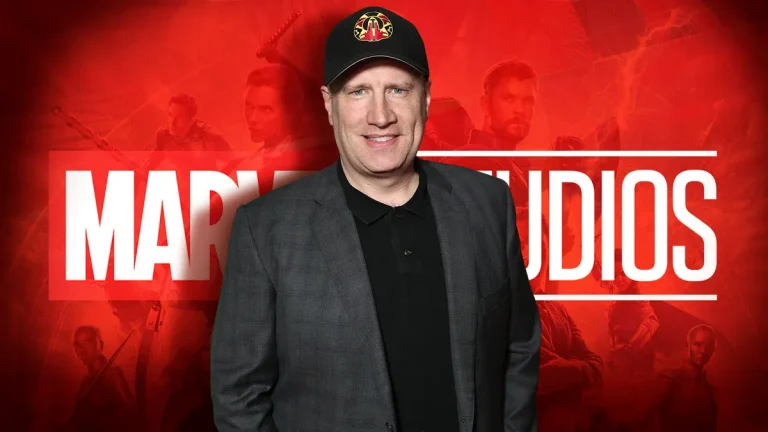
Marvel has begun its next chapter, and EW is giving you an exclusive sneak peek. Ant-Man and the Wasp Quantumania will be released in theaters on Friday. It’ll also mark the start of Phase 5, as well as the debut of Jonathan Majors Kang, a new antagonist. EW’s Quantumania Cover Story included an exclusive interview with Marvel’s Kevin Feige. During the interview, Feige, who is notorious for his cryptic nature, revealed details about Phase 4 and Phase 5. He was also wearing a Quantumania cap.
Feige, who is 49 years old, teases Marvel’s plans from the villainous Kang The Conqueror to the long-awaited arrival of the Fantastic Four.
Start with Ant-Man. Why did Quantumania make sense as the film that introduced Kang the Conqueror and kicked off Phase 5?
KEVIN FEIGE: We want to start Phase 5 with heroes you know. If we were to make another Ant-Man movie, we intended to spend most of the time in the Quantum Realm. You’ve seen a few glimpses and heard of this place in different movies. We wanted to explore it. We saw visuals from the Quantum Realm when we made the early films. It’s a real city. What’s that there? “That’s an entire civilization.” We hoped that we could explore it more one day.
For years, we have always suspected that Kang will be a fantastic follow-up to Thanos. In the comics, he has a similar stature but is a totally different villain. This is mainly because he has multiple villains. We liked that he was so different from Thanos.
Jonathan really started to shine in the early days [of Quantumania] when audiences were testing him. It’s been the most challenging villain in all of our [friends and family] screenings. This is a big deal for a film like this. Jonathan was already his effect, even before the results were added. He was already working. Marvel always plays a fun game of chance, saying: “Hey, we’re making multiple movies based on this character, and we’ll start before the audiences have even met him.” We are all-in on these concepts and casting. The season finale of Loki Season 1 was a huge relief. Kang has a lot of support. The people are chanting, “Kang!” Jonathan is on talk shows, and people haven’t seen the movie!
What about Jonathan Majors made him the perfect fit for this role? You said that he plays multiple versions of the villain…
The last black man in San Francisco is a big reason why we cast him. Peyton Reed [Quantumania’s director] was an early supporter of Jonathan. We knew that we would throw him in Quantumania and Loki Season 1 at the same time. Jonathan was perfect for the different characters of Loki and Quantumania. Spoiler: He was. [Laughs]
You’ve called Phases 4, 5, and 6 “Multiverse Saga,” and they all lead up to Avengers: The Kang Dynasty in 2025 and Secret Wars in 2026. What are your thoughts on Phase 5? Do you have a general theme or through-line?
This is a system of classification for the audience who’s following. This is to help you keep track of the order in which things are placed. I didn’t talk much about the themes or directions of Phase 4 until later — mainly because we adapt and weave as new creative ideas and demands come up. As you can see from Quantumania, it is about establishing the overarching theme for the future phases.
The Infinity Saga films did not all focus on Thanos or the Infinity Stones. This will be the case for both 5 and 6. But we’re gearing up. Quantumania will give people a huge taste of it as we prepare for Avengers: Secret Wars. I am extremely excited about this.
It’s hard to believe that I will soon be celebrating 23 years with Marvel. It’s been a long time. Not quite half of my life, but almost. [Laughs] Some of us have known each other for over a decade. We do it only because we’re so excited about what lies ahead. Storytelling-wise, the MCU is a completely new experience with the storylines that are woven together in Phases 5 and 6.
Phase 4 was an era of transition. After Endgame, several of your original cast left, and you introduced an entirely new group of superheroes. You started to embrace TV, launching multiple series on Disney+. What are some of the lessons or takeaways you learned from these projects?
I hope we learn from every project. I am very happy with all that we achieved. Kamala Khan is an excellent new character in the Marvel pantheon. I am very proud of Ms. Marvel. This is a spoiler, but I know that she will steal The Marvels [due to be released on July 28]. It excites me that people will see the movie and then revisit these shows on Disney+. It’s great that streaming shows are available forever and can be re-watched. Moon Knight is the same. There is a future for the character as we go forward.
Do you ever feel unwieldy as your company grows? How do you find the right balance between telling stories to the nerds who have seen 30 movies and trying to reach new audiences?
Since the beginning, we’ve been trying to follow this methodology. There’s no Marvel Studios method, but there was one in publishing. For years, you can watch a series on Netflix or go to the cinema every Friday night. There’s a lot more to discover if you follow along. We don’t want to make it seem like you have to do your homework to watch something.
Now, I have also discovered that many people enjoy doing the homework. Many people want the task, the continuity, and the connection. It is important to find a balance between the two.
The Hulk was, for instance, an experiment. “Let’s do a legal comedic.” What if Ally McBeal were a superhero? How can we make a legal comedy with a CG character that costs tens of thousands in every episode? Jessica Gao’s tone for this project is perfect. This project has a different style from many others, and this was done on purpose. When we do eight projects per year — and I’ve said that this will change a bit — they have to all be different. All of them must be unique and different.
You mentioned that television was a new experience for you. What were the most significant changes that resulted from that experience?
The audience and I have learned that going to places you wouldn’t expect can be rewarding for your creativity. It’s fun seeing it. We knew this to some extent, but we never saw it. We want to make shows that are only shows. It may seem contradictory, but I want them to be even more episodic. There is something enjoyable about watching an episode, even if it’s a relatively short one.
Lost was a show that had a huge impact because of the serialized story. This was hardly seen on television. How long ago was that, 20 years ago? Since then, everything has changed. Now, and you are seeing this with other shows as well, you can see the enjoyment of an episodic, self-contained story. We will experiment with this in some of our future things.