Aarhus University has released a new study that shows that female athletes reduce their energy intake while increasing their training, negatively impacting their health and ability to respond to the movement.
If you want the best results, diet, and training must go hand-in-hand. Many athletes know this and closely monitor their activity and energy intake. A new study at the Department of Public Health at Aarhus University has shown that female athletes’ bodies are negatively affected by consuming too little energy in their diet compared to their training volume. PhD student Mikkel Oxfeldt explains. He conducted the study and Associate Professor Mette Hanen.
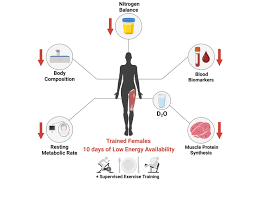
We know that elite female athletes, as well as active women, sometimes, unconsciously or consciously, do not have an energy intake that matches their energy expenditure during training. Insufficient energy intake has negatively impacted the muscles’ response to exercise. We began to see changes in the hormonal system after just ten days of low-energy information. This included a drop in metabolic hormone and a subsequent decrease in metabolism.
According to the study, women should be careful not to reduce their energy intake excessively. Mikkel Oxfeldt says that women should increase their energy intake when they increase their training volume.
When you do not get enough energy through your diet, the body begins to reduce energy-intensive processes, like a phone going into battery-saving mode. Previous studies have shown that this can stop some women’s periods. Our results also show that other methods, like building new muscle proteins, are affected.
Weight is not the only issue.
The study, funded by Novo Nordic and Team Denmark under the title ‘Competition Preparation and Training Optimization,’ involved 30 fit women aged 18-30. The study was conducted by all the women three weeks after their first menstrual cycle. They followed a strict diet and training regimen.
Under the supervision of researchers, participants completed individual training programs to increase strength, muscle mass, and overall fitness. We also provided the women’s food. By controlling both their training regime and diet, we were able to determine how much energy the women expended during the study and what they consumed.
This is the first time a study of this kind has been conducted in which both the diet and exercise of a group of fit women have been controlled to such an extent. All participants consumed water that was enriched with trace materials and double-labeled. We can get a detailed understanding of the muscle’s response to the experiment by combining this tracer technique and retrieving and analyzing muscle tissue samples.
Mikkel and his research group think it is essential to challenge the notion that weight loss will lead to medals when weight loss can negatively impact several body systems, including muscles.
In recent years, public weigh-ins have been reported in some elite sports. These weigh-ins are part of a culture encouraging women to try to lose weight constantly. Our results indicate that this weight-loss focus can have short- and long-term adverse effects on women’s health and performance. The study should provide athletes and coaches a more nuanced view of potential side effects.”
Researchers from the University of Copenhagen, the University of Southern Denmark, and the University of Copenhagen are working to investigate how inadequate energy intake affects physical performance, the immune system, and metabolism. One day, they hope to determine if there are differences in how men’s and women’s bodies respond to an inadequate energy intake.