Officials from the health sector warn that drug-resistant malaria could undo recent advances in Africa and Southeast Asia. Researchers are now looking at a new way to combat the mosquito-borne parasites responsible for the disease. They have focused on biological clocks.
The internal clocks of most living organisms regulate fluctuations in hunger, hormone levels, and gene activity.
Researchers analyzed the gene activity of patients at medical facilities near the Thailand-Cambodia frontier with signs of malaria in their blood. The study was published in Proceedings of the National Academy of Sciences on June 6.
The team discovered that malaria parasites sync their molecular clocks to the 24-hour clocks in their hosts. Their genes rise and fall in perfect lockstep over a day like two pendulum clocks swinging in time.
Researchers at Duke University, Florida Atlantic University, and the Armed Forces Research Institute of Medical Sciences have said their findings could pave the way for new anti-malarial medications that throw the malaria parasite’s internal clock off-sync with the host.
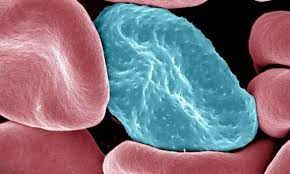
A deadly loop occurs inside the body of someone with malaria. The disease’s fever spikes occur because of tiny Plasmodium parasites, which invade a person’s blood red cells, multiply, and then explode in unison. They invade and spread to other cells.
The cycle is repeated every 24 hours, 48 hours, or 72 depending on the Plasmodium. Scientists wondered: Could the parasites coordinate somehow with their hosts’ 24-hour circadian clocks?
Researchers collected blood samples from 10 individuals who had tested positive for malaria due to Plasmodium Viax – the most common malaria parasite in Asia and Latin America.
They then analyzed the RNA from these samples every three hours for two days to determine which genes were active while the parasites matured within the red blood cells of their victims. The research team used a technique known as RNA sequencing to track the expression of over 1,000 genes both in the immune cells of the patients and the parasites in their blood.
Researchers identified hundreds of genes that follow a rhythmic clock, increasing at certain times and decreasing at other times. They developed a method to calculate the internal clock for each patient and their parasites. They then figured out how well gene expression rhythms were aligned.
Plasmodium vix Parasites repeat their life cycle every 48 hours. For every process of the parasite’s clock, their 24-hour host body clock went around twice.
Not all patients’ 24-hour clocks ran precisely on the same schedule. Some cycles began earlier, while others started later. No matter how a person’s biological rhythms were altered, their malaria parasites would align to match.
Researchers knew that the malaria parasites had their internal clock. Haase, along with his colleagues, determined in a study from 2020 that malaria parasites can keep time even when grown outside of the host. The parasites’ rhythmicity comes from an internal metronome that ticks on its own and causes their genes to increase and decrease regularly.
The new study reveals something else. Haase explained that “these results suggest that the parasite and host clocks communicate.”
Scientists don’t yet know why malaria parasites coordinate their rhythms to those of their hosts. Haase says that parasites may be taking advantage of the internal rhythms of their hosts to reach their own goals. However, the exact nature of this advantage has yet to be discovered.
The theory goes that parasites emerge from red blood cells at times when the immune system of their victims is active. This makes them less vulnerable.
Haase added, “They may also be timing the development cycle to ensure they get the right nutrition.” “We don’t know. “That’s a huge question.”
Malaria has not been a problem in the United States for over 70 years. However, it is still a significant killer in tropical and poorer parts of the globe, with 619,000 deaths in 2021, primarily children.
Malaria’s ability to evade attacks is one of the reasons. Many malaria drugs have been available for centuries, but they are becoming less effective as the parasites in some parts of the globe develop new ways to avoid them.
Suppose they can determine how malaria parasites keep up with the human clock. In that case, creating new drugs that will decouple parasites’ clocks from their hosts is possible, allowing the immune system to combat the invaders better.
The findings in other hosts are encouraging. The malaria parasites that are not in sync with the hosts’ rhythms spread infection half as effectively.
The researchers will now try to determine how parasites and humans’ communicate’ so that the cycles of both clocks line up.
Haase explained that molecular messages must be sent back and forth between the two. “We don’t know what they’re called, but if you can disrupt them, then we may have a chance at an intervention.”