One of the nation’s largest banks has warned up to 200,000 Australians could lose their jobs over the next 18 months as the economy sinks under the weight of 13 interest rate rises, with more expected.
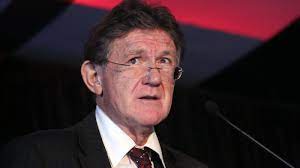
NAB chief economist Alan Oster, who believes the Reserve Bank will lift official interest rates to 4.6 percent by the end of winter, said the economy is now facing its worst back-to-back years since the 1990-91 recession.
The RBA has lifted official interest rates from 0.1 percent in May last year to 4.1 percent this month in the most aggressive tightening of monetary policy since the late 1980s.
It aims to bring down inflation, currently at 7 percent, without driving up unemployment in what bank governor Philip Lowe has often described as a narrow path.
But Oster said while the economy had kept growing as the Reserve Bank started lifting interest rates through 2022, further increases this year would hit the economy and the jobs market.
“While the economy remained resilient through 2022, there are increasing signs that interest rates are beginning to flow through with nominal (and real) spending growth slowing, an ongoing impact on housing construction, and softening capital expenditure expectations,” he said.
Taking rates to 4.6 percent will weigh more heavily on growth, and we have revised our expectations for an increase over 2023 to just 0.5 percent and pulled back expectations for 2024 to around 0.9 percent. That sees unemployment rise more quickly and reach 5 percent by the end of 2024.”
Unemployment at 5 percent would take the number of people without a job beyond 720,000 – a 200,000 jump on the current number. Economic growth below 1 percent is considered recessionary. The economy expanded by just 1 percent in 1990 before contracting by 1 percent in 1991.
The RBA is forecasting economic growth this year of 1.25 percent before picking up to 1.7 percent through 2024. The jobless rate, now at 3.7 percent, is forecast to reach 4.4 percent by the end of next year.
Oster said the RBA was focused on lagging indicators, such as unemployment and inflation, while those giving an insight into how the economy would perform in coming months were painting a bleaker picture.
The NAB’s monthly business survey, released on Tuesday, showed sharp falls in business confidence, trading conditions, profitability, orders, and employment.
It’s not only businesses feeling the pinch. The Westpac-Melbourne Institute measure of consumer confidence remains at recessionary levels, with shoppers increasingly worried about the state of the jobs market.
Westpac chief economist Bill Evans said inflation, the budget and taxation, economic conditions, interest rates, and employment are among the issues most resonating with consumers.
Almost half of those surveyed expect the Reserve Bank to lift interest rates another percentage point. At the same time, there was a sharp increase in the number of people expecting unemployment to start climbing.
“Of most concern is confidence around jobs – which has been the bright spot in otherwise bleak consumer surveys over the last year. This now looks to be fading fast,” Evans said.
Prime Minister Anthony Albanese, speaking to the Committee for Economic Development of Australia conference in Canberra, said economic growth had to be shared among all residents.
Albanese, who is pushing ahead with the same pay, and duplicate work reforms in the face of opposition from major employer groups, said without equitable growth, Australia would face the same problems that confront the United States.
“We all are interested in a society that doesn’t see increasingly a gap between people,” he said.
“We make no apologies for having a debate about this. [It is] a debate about this is in the interests of the sort of society that we want, which summarised best from my view is an economy has to work for people, not people working for the economy.”