Researchers at Texas A&M University have developed a method that makes it easier to understand the behavior of metals in extreme conditions.
When studying material properties, metal cutting (scraping a thin layer of a metal surface with a sharp blade) might be different from what you think of—however, Drs. Dinakar Sagapuram and Hrayer Aprilhamian, both assistant professors at the Wm Michael Barnes Department of Industrial and Systems Engineering (Wm Michael Barnes’64), wanted to determine if this process could be used to predict the behavior of materials under different deformation conditions. Harshitchawla, a doctoral student in industrial and systems engineering, and Dr. ShwetabhYadav, assistant professor at the Indian Institute of Technology Hyderabad, were part of the team.
Chawla stated that “the knowledge of how materials deform under harsh mechanical conditions will be vital to study and develop various technological applications including manufacturing processes, vehicle crash testing and impact testing in defense-related applications.”
The team hypothesized that because the cutting process involves local shearing or deforming metal at extreme levels, it would provide fundamental information about the material’s resistance to plastic deformation or irreversible form change.
Sagapuram stated that the research “opens a new, interesting application of metal cutting for material scientists and physicists to test their theories.” The number of mathematical models of metal plasticity at high strain rates is far greater than the experimental data. The property data obtained by metal cutting allows us to test the validity of various theories.
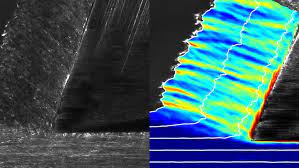
The team uses high-speed cameras to observe metals’ deformation and shear as they come into contact with a cutting tool. This information is then used to derive their basic properties. The challenge is to extract intrinsic material properties using high-speed visual imaging data. Aprahamian is not an expert in metal cutting, but the partnership with Sagapuram led to new numerical techniques and ideas.
Aprahamian stated, “An important aspect of the research is to establish mathematics optimization techniques which guarantee global optimality and thereby achieve the best solution possible.” If you don’t, the solutions may seem reasonable but not accurately reflect the material.
The advantages of metal cutting over conventional testing are that it’s simple, and you can create conditions that are difficult to produce using traditional tests but important for various engineering applications.
Sagapuram stated, “We are excited about the prospect that cutting can be used as a convenient way to determine material characteristics which were previously only obtained with great difficulty.” Because it’s so easy, anyone accessing a machine shop can obtain material information without sophisticated testing abilities.
The team recently published their work in the Proceedings of the Royal Society, A journal. Another paper on numerical techniques is in the works. A grant from the National Science Foundation supports the research.
Sagapuram stated that the team recently began collaborating with Los Alamos National Laboratory. The Texas A&M University System National Laboratories Office supports this collaboration. They are comparing their data to the more established materials’ dynamic strength testing platforms on-site at the lab. These studies will help validate the method and confirm that different experiments performed on the same metal produce consistent results.
Aprahamian stated that their work developing mathematical techniques has applications beyond material characterization.
Aprahamian explained that his group was extending these algorithms and techniques into the healthcare industry, using global optimization to create robust screening strategies. This can be used to improve the screening of infectious diseases in the population and prevent future outbreaks.
Chawla says the research allowed him to explore a subject that has interested him for many years.
Chawla stated that studying the mechanics behind the metal-cutting process by using experimental techniques was fascinating. It was fascinating to see the material deformation at close range, even at microscopic levels, at a high frame rate.