Scientists have discovered a mechanism that leads to oscillating superconductivity, also known as pair density waves. Physical Review Letters has published this discovery. It provides new insights into certain materials’ high-temperature, unconventional superconductive states.
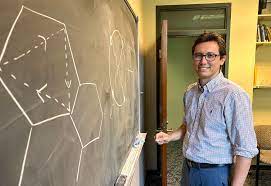
Luiz Santos is an assistant professor at Emory University and the senior author of this study. He says, “We found that structures called Van Hove singularities could produce modulating and oscillating superconductivity states.” Our work provides a theoretical framework to understand the emergence and behavior of this phenomenon, which still needs to be fully understood.
Pedro Castro is a graduate student in physics at Emory. Daniel Shaffer is a Stanford University postdoctoral scholar, and Yi-Ming Wu is an Emory physics graduate student.
The Office of Basic Energy Sciences of the U.S. Department of Energy funded this work.
Superconductivity: the puzzle
Santos, a theoretical physicist who is an expert in condensed matter physics, is a specialist. He studies interactions between quantum materials, tiny particles such as photons, electrons, and atoms that do not behave according to classical physics laws.
The superconductivity of certain materials, which is their ability to conduct electricity with no energy loss at a very low temperature, is an example of quantum behavior. 1911 Dutch physicist Heike Kamerlingh discovered the phenomenon when she showed that mercury’s electrical resistance decreased when it was cooled down to 4 Kelvin (minus 371 degrees Fahrenheit). This is about the temperature of Uranus – the coldest planet in our solar system.
Scientists did not discover superconductivity until 1957. In average temperatures, the electrons move more or less on their own. They bump into particles and cause them to change speed and direction and release energy. However, electrons can organize themselves at low temperatures into a different state of matter.
Santos explains that “they form pairs which are bound into a collective entity that acts like a single unit.” You can imagine them as soldiers in an Army. They are more difficult to stop if they move in isolation. When they march in lockstep, it is much more difficult to destabilize. This collective state is robust.
The holy grail in physics
The potential of superconductivity is enormous. Theoretically, this could allow electric current to flow through wires without heating up or losing energy. The cables would then be able to carry more electricity more efficiently.
Santos claims that room-temperature superconductivity is a holy grail of physics. It is practical for everyday applications. This breakthrough could transform the face of civilization.
On this frontline, many physicists & engineers are working to revolutionize how electricity is transferred.
Superconductivity is already being used in many applications. Superconducting coils power the magnetic waves in MRI machines. Superconducting magnets power magnetic levitation train systems 10x more robust than regular electromagnets. When the magnets’ matching poles face each other, they repel each other and create a magnetic field to propel a train.
Superconductivity is also used in the Large Hadron Collider (a particle accelerator) that scientists use to study the structure of the Universe.
Many materials are now superconductive, even at higher temperatures.
An accidental discovery
Santos has focused his research on how electron interactions can lead to superconductivity forms not explained by the 1957 definition of superconductivity. This exotic phenomenon can be seen in oscillating superconductivity. The paired electrons move in waves and change amplitude.
In a separate project, Santos asked Castro to look at specific properties of Van Hove singletons, structures with many electronic states close together. Castro’s project showed that singularities had the correct type of physics for superconductivity to be induced.
Santos’s curiosity prompted him and his colleagues to dig deeper. They discovered a mechanism allowing Van Hove singularities to produce these superconducting states with dancing waves.
Santos explains that, as theoretical physicists, we try to classify and predict behavior to understand nature’s workings better. Then, we can ask questions that are relevant to technology.
This dancing-wave behavior is observed in some high-temperature superconductors that operate three times colder than a home freezer. This behavior is a result of Van Hove’s singularities. It provides experimentalists with a basis to explore all the possibilities.
Santos: “I doubt Kamerlingh was thinking of levitation when he discovered the superconductivity.” “But all that we learn about this world can be applied.”