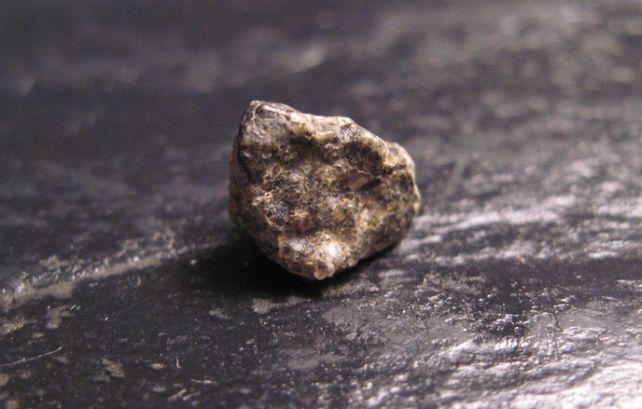
Mars is still a long way from humans, who have yet to step foot on Mars. But over time, Mars came to humans. The Solar System is awash with chunks of Martian rocks that were ejected by violent impacts and other processes. Earth is crashing.
A curious pattern is emerging as we collect samples from our neighboring planet. The majority of models appear to be rocks formed relatively recently on the red world; this is unusual, considering the age of most of Mars’s surface.
They may be mostly wrong. Scientists aren’t confident about the dates of these rocks because different dating techniques produce different results.
Scientists from the US, UK, and Australia have now found a solution to this problem. To their surprise, they found that many of the rocks were, in fact, quite young, only a few hundred million years old. This information can provide clues as to how long it took the meteorites to reach Mars and also about geological processes.
Ben Cohen, a volcanologist at the University of Glasgow and the lead researcher in the study, says: “We know that these meteorites are definitely Mars-derived from their chemical characteristics.”
They’ve been blown off the red planet in massive impact events that have left large craters. There are thousands of impact craters on Mars. We don’t yet know where the meteorites came from. The age of the samples is one of the best clues to help you determine the source crater. There are about 360 meteorite specimens on Earth that have been identified to be of Martian origin. Some 302 of these are classified as Shergottite. This is a type of metal-rich Mars rock forged during volcanic activity.
Scientists have dated the surface of Mars as being quite old based on its heavily cratered surface. Many craters on the surface would disappear if it were fresher due to volcanic activity. Any rocks that are ejected off the Martian surface must be old.
Shergottite is a complex mineral that makes dating difficult. However, what we can tell from it suggests many of the rocks are younger than 200 million. The shergottite-age paradox has been bugging researchers for decades.
The explanations for this surprising young possibility varied from the idea that an impact event may have heated up and smushed rock to the point that its age has been reset. These theories did not match the evidence, the stones.
Argon-argon dating is the method that is used to determine the age of Shergottite. It is based on radioactive potassium decaying into Argon. Scientists can use this ratio to date a rock sample by determining the age of the radioactive decay.
On Earth, it is easy to account for different sources of Argon that could enter a sample. This is a bit more difficult for Shergottite, which originated on another planet and spent who knows how much time in space. Shergottite has five possible sources of Argon, while Earth rocks only have three.
Cohen and his co-workers developed a way to compensate for the argon contamination that comes from Earth and outer space. He explains that after they did this, the argon and argon ages were young, matching perfectly with other methods like Uranium Lead.
The researchers dated seven shergottite samples and found ages between 161 million to 540 million ago. Researchers say the bombardment on Mars may have exposed the younger rock underneath, which has been replenished through volcanic activity. It is more likely to happen that the younger rock will be excavated and then ejected.
Meteorites and volcanic activity constantly bombard Mars. Scientists estimate that 200 impacts per year produce craters larger than 4 meters. It’s not surprising, then, that older rocks are sometimes hurled towards Earth in a Solar System-like way.