After suffering significant losses over the last four sessions, today’s Australian stock market started higher.
Wall Street has recovered from a three-day losing streak. A US inflation report will determine if the US Federal Reserve raises interest rates this month.
ASX recovers after dropping for four straight days
Australian shares are soaring, boosted by gold and mining stocks.
By 12:30 pm, the ASX 200 index had gained 1% and reached 7,071 points.
All significant sub-indices are in positive territory, and the benchmark stock index looks set to end a four-day streak of losses.
The “big four” banks gained between 0.5% to 1.4%.
Meanwhile, traders await further economic stimulus from China, Australia’s largest trading partner. Data showed that the economic recovery was slowing down, and consumer spending was also affected.
BHP, Rio Tinto, and Fortescue Metals rose more than 1%.
The gold stocks rose 2.2%, their best day since the 3rd of July. Sector-majors Northern Star Resources (up 1.8%) and Newcrest Mining (up 1.4%), respectively.
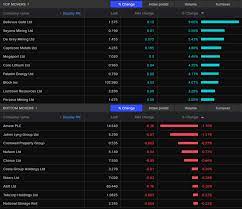
The ASX 200 chart was topped by Bellevue Gold (above 5%), Capricorn Metals, and De Grey Mining.
Cafes in Australia are the first casualties of rising interest and production costs.
The cost of living crisis and squeezed profits have made Australia’s famed cafes a target.
The $10 billion industry, the largest outside Europe in per capita sales, is now experiencing a new round of closures among those who survived the COVID downturn.
Economists and industry experts say it results from rising utility costs, higher product prices, and the slowdown in discretionary expenditure.
A Reuters study found that the cost of commercially producing a sandwich with steak, including all overheads and other fees, has increased by one-sixth over the last two years.
This rise in spending was combined with an overall flattening of discretionary expenditures, essentially wiping out the industry’s typical 10 percent profit margin.
The cost of making a flat-white has risen by almost one-fifth.
This results in smaller profits and a decreasing pool of customers and owners leaving the business.
NAB survey: Business conditions stable, a sign of resilience
Businesses are doing better than consumers, even though consumer sentiment is still very negative.
In June, Australian business conditions remained ‘above the average’ despite costs increasing.
The National Australia Bank’s closely watched business survey showed that its index of conditions was +9 after dropping six points in June.
The volatile measure of business confidence has jumped by three points.
A score below 0 indicates a pessimistic mood.
“Business conditions are down notably from January, but they remain above the long-term average. This is a sign that business resilience continues,” said NAB’s chief economist Alan Oster.
The survey shows warning signs about the growth outlook, but firms have yet to see a significant deterioration as of June.
Regarding labor costs, the quarterly increase was 2.6% because firms accounted for minimum wage and award increases. However, input cost growth remained flat at 2.3%.
Westpac survey: Consumer optimism improves, but inflation still weighs on optimism
The Australian consumer sentiment improved in July as inflation decreased, and Reserve Bank did not raise interest rates. However, financial worries were still prevalent.
The Westpac-Melbourne Institute Index of Consumer Sentiment rose by 2.7% to 81.3 in July, the most significant gain since April, when rates were also steady.
Pessimists outnumber optimists if the score is below 100.
The measure of household finances in the survey compared with a year earlier remained depressing, falling by 4.9%. This is due to cost of living pressures.
The RBA kept rates at 4.1% during the survey period last week but warned it may have to raise them again to bring down inflation.
The monthly inflation rate for May was a welcomed 5.6%. However, core price measures were still stubbornly high.
The survey’s index for buying houses rose 6.2% in July. This is a sign of demand.