The public’s interest in bee conservation is growing as populations worldwide decrease.
How much do you know about the local bees in your area?
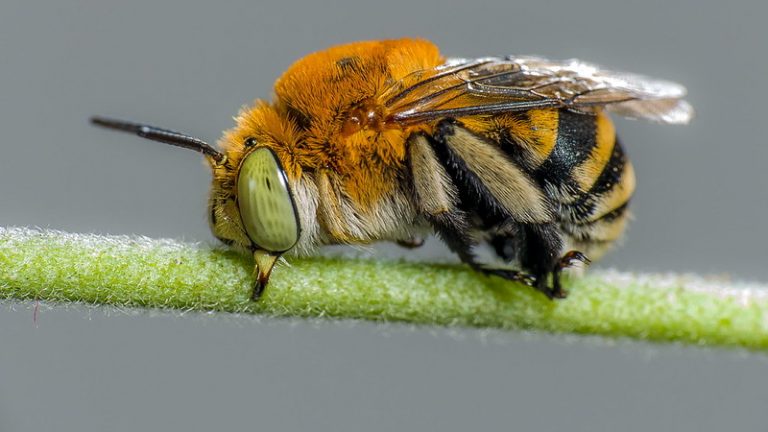
Kit Prendergast, also known as Bee Babette, is a native bee ecologist who studied at Curtin University.
She is on a quest to discover what the WA bees desire and how to give it to them.
What’s the buzz?
Over 20,000 bee species are known.
Most of the research has been focused on honeybees, specifically the Western honeybee, Apis méllifera.
Unsurprisingly, honey bees are the focus of scientific attention, given that a third of the world’s food production depends on their pollination service.
Kit says that native honeybees have different needs than exotic honeybees. We know very little about the local bee population.
Kit says there is “virtually no ongoing monitoring” of the [wild] bee population.
There are 1661 species described in Australia, but hundreds more have yet to be told.
PICKY POLLINATORS
Native bees have special diets and distribution.
We rarely learn how bees are affected by bushland clearing for farming.
Kit says, “We may lose species we don’t know about before they are named.
Checking in at Bee Hotels
Bee hotels or trap nests are popular ways to attract native cavity-nesting honeybees in urban areas.
Kit says that commercially available beehives are often constructed without scientific backing, and their impact on indigenous species needs to be better understood.
Kit conducted 2-year research in which 120 specially-designed bee hotels were installed at 14 locations across Perth. The aim was to observe how the bees responded.
The hotels attracted 24 different species. The Native bees prefer smaller nesting cavities with diameters between 4 and 7 millimeters.
Kit says that many beehives have holes too large.
When designed correctly, they can support a wide variety of native bees.
Kit says that distributors of bee hotels need to work with scientists to improve the designs.
Disturbing Taste
A surplus of their favorite food is also a deciding factor.
Kit discovered that native bees in Perth forage on native plants.
She believes that the “just plant flowers” approach to helping native bees may not be practical.
Kit says, “We must plant the right kind of flowers.”
There are some species that a considerable variety of native bees prefer.
Native bees prefer eucalypts as well as bottlebrushes and melaleucas.
During the study, 70-80% of all native bees visited these plants.
Why Natives are the Bee’s Knees
The importance of bees as href= “https://australian.museum/learn/animals/insects/pollination/#:~:text=Bees%20are%20ideal%20pollinators%20because,same%20species%20is%20very%20high. It is known that pollinators are essential for many different plants.
You may not be aware that certain species, including native Australians, can perform “Buzz Pollination.”
Bees use their flight muscles to vibrate the plant’s anthers, which release hard-to-reach pollen.
This technique is necessary for pollinating many native flowers and some garden plants, such as tomatoes.
This way, native bees, and native plants can work together. This helps to maintain a healthy level of biodiversity.
If you want to be a bee-lover
Kit stresses that every species, regardless of how ‘useful they may be’ to humans, is worth saving.
Kit says asking what an animal can do for you has led to the current biodiversity crisis.
She says the first step is to provide the public with current information and the governing bodies.
Kit says, “Nurseries or councils could plant native street trees such as Corymbia Calphylla instead of jacaranda,” for example.
We need to include native bee surveys in our environmental impact assessments.
Bees are essential because they can act as indicators of species and play a role in the ecology of the landscape.