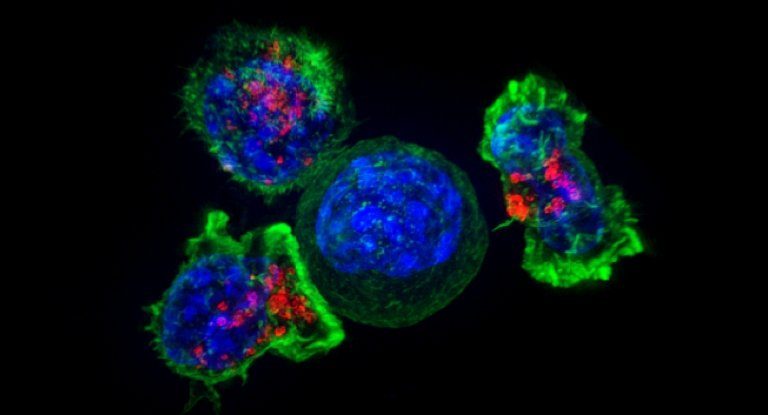
A new study has revealed one of the critical mechanisms that prevent cancer from spreading. We now know how this mechanism works so that we can stop it.
GRP78 is the key to this new process. It’s a protein chaperone. This is a protein type that helps in the folding and unfolding of large proteins. It can either build them up or tear them down, depending on whether they are biologically active.
The Keck School of Medicine of the University of Southern California in the US has found that cancer cells can hijack GRP78 and use the protein to expand further in the body and resist treatment.
The protein appears to migrate when stressed. GRP78 typically resides in the Endoplasmic Reticulum of a cell. However, this study shows that it can move to the nucleus, where it changes the cell’s behavior.
“Seeing GRP78 inside the nucleus that controls gene expression was a complete surprise,” states Amy Lee. Amy Lee is a molecular and biochemist at USC.
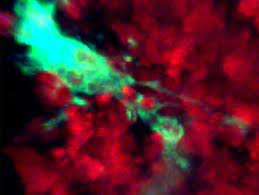
This is a novel observation that no one else has made before. The discovery was made by analyzing how GRP78 regulates the EGFR gene, previously linked to cancer. Confocal Microscopy was used, which uses separate beams to improve resolution, to confirm GRP78’s migration. RNA Sequencing, which takes a snapshot of cellular activity, was used to examine further what the GRP78 proteins were doing. The essential genes that it regulated were involved in cell invasion and migration.
Researchers also made an important discovery about how GRP78 interacts or binds to another cell protein, ID2. GRP78 appears to stop ID2 from performing its regular job. This limits the activity of genes involved in cell migration, including EGFR.
Scientists can control cancer metastasis by stopping GRP78 from moving around or blocking ID2. We might be able, for example, to destroy cancer cells spreading by blocking ID2 or stopping GRP78.
It will take a lot of research to reach that point, but we are progressing our understanding of cancer growth.
Lee says, “This is an entirely new concept.” “The soldier itself is the protein that does the work, but we are now thinking about not only the soldier but also the location of the soldier.”