Researchers from the Center for Advanced Bioenergy and Bioproducts Innovation have made an important leap in the world of complex molecular chemistry.
Their focus? Azaarenes are unique molecular puzzles that play a crucial role in many products we use every day, from eco-friendly agrochemicals and essential medicines to everyday household items. The CABBI team showed an innovative way of modifying these molecules. This discovery holds promise for new industrially applicable chemical reactions and sustainable energies.
Photoenzymatic systems are at the heart of their research. It’s like supercharging enzymes with a flashlight to enable them to repair or assemble molecular structures in new ways. Scientists have discovered novel chemical reactions by harnessing light.
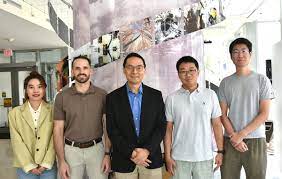
Researchers from the University of Illinois Urbana-Champaign conducted this study. It was published in Nature Chemistry. Huimin Zhao is the CABBI Conversion theme leader. He is also a Professor of Chemical and Biomolecular Engineering Carl R. Woese Institute for Genomic Biology, and Director of Illinois’ NSF Molecule Maker Lab Institute. Maolin Li was a Postdoctoral Associate at CABBI, ChBE, and IGB.
Azaarenes are a small group of compounds that play an important role in chemistry. These building blocks are used in many combinations and can influence the DNA of our cells. The challenge has always been their manipulation.
Researchers have found a way of modifying molecules in a complex manner without causing collateral damage. This was made possible by the team’s creation of a system called ene reductase, a molecular toolkit that uses the enzyme ene reductase. Zhao’s laboratory has used this enzyme before.
Their work has been a major success in the field of enantioselective transfer of hydrogen atoms. Like gloves, molecules are often available in both left- and right-handed versions. The team’s technique allows them to target and adjust either version selectively with unprecedented precision. They could also make these precise adjustments remotely, using remote stereo control.
This discovery has a profound impact on CABBI, the bioenergy industry, and its future. Biofuels bioproducts – energy and products made from plant matter instead of nonrenewable resources such as petroleum – represent a more sustainable and greener future. The research of the team has increased the number of bioproducts and chemical reactions that can be produced efficiently.
The study introduced asymmetrical photocatalysis as a revolutionary technique to ensure consistency in these reactions. This can lead to new ways of producing biofuels from biomass. It also aligns directly with the DOE’s mission, which is to develop sustainable energy solutions.
Zhao stated, “We are not only pushing the boundaries of chemistry with our novel approach to Azaarenes, and using enzymatic Hydrogen Atom Transfer,” Zhao. We’re laying the foundations for an innovative and sustainable future. Our research has expanded the toolkit for eco-friendly production and could catalyze breakthroughs beyond agrochemicals.
The potential for real-world application is enormous, whether it’s a leader in sustainable energy or a pioneer of safer agricultural chemicals. Bioenergy and bioproducts advancements can contribute to economic growth by creating new industries, providing jobs and products to consumers, as well as lowering the cost of energy. The research will reduce pollution by promoting efficient and sustainable production methods. This can lead to cleaner air and water in communities.
Li stated that these discoveries are a way to move forward as the world struggles with environmental challenges and the urgent need for sustainable solutions.
As a postdoctoral research fellow on this project, I have been immersed in the complexities of azaarenes. It has been a real thrill to unravel the mysteries of remote stereo control and see the possibilities that our discoveries can have. This research is not just about nuances in chemical reactions but also about the future of energy sustainability and more. “I’m eager to see where our journey will take us next,” Li stated.
The study was co-authored by Wesley Harrison, a Ph.D. student, as well as Yujie Yuan, Zhengyi Zheng, and Yujie Yuan, Postdoctoral Researcher at CABBI, ChBE, and IGB.