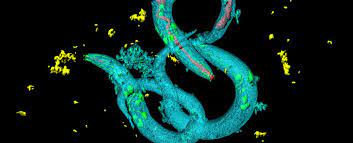
According to a study published July 27, 2023, in PLOS Genetics, a soil nematode reanimated out of Siberian permafrost lay dormant for about 46,000 years. The researchers were Anastasia Shatilovich from the Institute of Physicochemical and Biological Problems in Soil Science RAS in Russia and Vamshidhar Gaude from the Max Planck Institute for Molecular Cell Biology and Genetics in Germany.
Some animals, such as tardigrades and nematodes, can survive harsh conditions if they enter a dormancy known as “cryptobiosis.” In the past, nematode specimens were reanimated using samples from a fossilized silt deposit in the northern Arctic. Radiocarbon analysis of the plant material in the burrow revealed, during this study, that the frozen guarantees 40 meters beneath the surface had not thawed out since the Pleistocene era, roughly 45,839 to 47,769 years ago.
Using genome assembly and phylogenetic analyses of the nematode’s relationship to other modern species, researchers determined that the nematode belongs to a previously unknown species, Panagrolaimus kolymaensis. The researchers compared the genome of this nematode with that of Caenorhabditiselegans and found genes involved in Cryptobiosis. Both species produced more trehalose when mildly desiccated. This sugar may help both species survive harsh desiccation or freezing. The researchers tested P. kolymaensis’s survival abilities and found that mild desiccation before freezing prepared the worms for Cryptobiosis and increased survival at -80degC. The treatment also benefited C. elegans larvae that survived for 480 days in a -80degC environment without losing viability or reproduction.
This study extends the longest Cryptobiosis reported in nematodes by tens or thousands of years. The nematodes may have adapted to extreme conditions such as permafrost for short periods and thus gained the ability to remain dormant on geological timescales.
The authors continue, “This study also suggests that fluctuations within the environment can also affect the length of time an organism remains in a state of cryptobiosis.”