Researchers have discovered a new method for activating G-protein coupled (GPC) receptors inside cells. This helps to develop drugs that are free of side effects.
The team has identified a PCO371 molecule that interacts with an intracellular GPCR. This molecule offers a promising treatment for obesity, pain, and neurologic disorders.
Have you ever wondered how drugs achieve their target and function in our bodies? When a drug or ligand is a message, a cell membrane receptor is usually an inbox. G protein-coupled (GPCR) receptors are one such receptor that relays molecular messages. Approximately one-third of all drugs are controlled by this protein. Researchers in Japan have discovered a new method of activating GPCRs by changing the shape of the receptor’s intracellular region. This new method can be used to design drugs with fewer or no side effects. If the cell membrane were like an Oreo sandwich, GPCR would be like a snake whose seven segments move in and out from the sandwich’s surface. The extracellular loops act as the mailbox for messages. When a message molecule is bound to the extracellular receptor side, it triggers the shape change that activates G proteins and the ss-arrestin attached to the intracellular receptor side. Information is transmitted downstream, affecting various bodily functions. This is how we perceive light, taste, and smell. These are all sensations that come from messages of odor and taste.
If drugs that act on GPCRs can activate multiple pathways of signaling rather than one specific pathway, they can cause adverse side effects. For this reason, drug development focuses on activating molecular signal pathways within cells. One way to achieve more specificity is by starting the GPCR inside the cell rather than outside. There was no evidence until now that the intracellular GPCRs could be activated directly without any extracellular initiations.
Researchers led by Osamu Nureki of the University of Tokyo and his laboratory discovered that a GPCR related to bone metabolism, called human parathyroid type 1 receptor (PTH1R), can be activated without needing signal transduction on the extracellular side.
Kazuhiro Kobiashi, a doctoral candidate and author of the study, says that understanding the molecular mechanisms will allow us to design the best drugs. This drug is “a promising treatment” for osteoporosis.
Kobayashi began studying bone formation using animal models when he was a student. He says that the only alternative to PTH1R-targeted osteoporosis treatments is to use strict doses and restrictions on administration routes. This motivated their team’s search for better strategies to design drugs that target the parathyroid receptor.
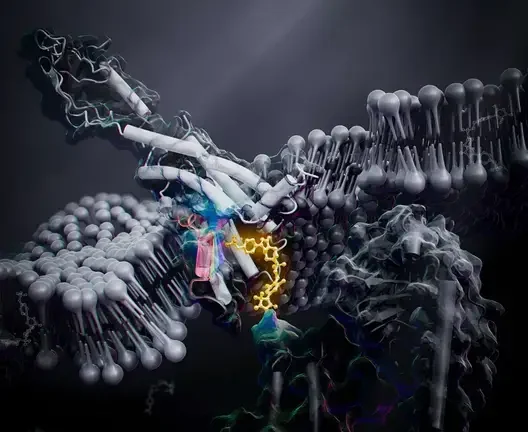
Cryo-electron microscopes revealed the 3D structure PTH1R bound with G protein and a message molecule. The team synthesized PCO371, a nonpeptide message molecule that attaches directly to G protein subunits and binds intracellularly to the receptor. PCO371 activates receptors after they enter the cell.
The PCO371-bound PTH1R can directly and permanently modulate the intracellular PTH1R. PCO371 has no side effects because it activates G protein, not ss arrestin. Its specificity in binding and receptor activation makes it an ideal candidate for small molecule-based drugs targeting class B1 GPCRs like PTH1R, which lacks oral administration drug ligands. These drugs would reduce adverse effects on patients and their burdens as they target specific molecular pathways.