USC researchers have made a surprising discovery that reveals essential details about cancer cells’ metastasis and offers new therapeutic approaches to stop their spread.
Research supported by the National Institutes of Health focuses on GRP78, a chaperone that helps regulate the folding of proteins within cells. The same team led by Amy S. Lee, Ph.D. professor of biochemistry, molecular medicine, and USC’s Keck School, has shown in previous studies that GRP78 is hijacked when cells are stressed (due to COVID-19 or cancer). This allows viral invaders and cancers to grow and resist treatment.
Lee and her co-workers have made a surprising discovery that may allow scientists to protect their cells from this hostile takeover. GRP78 is usually found in the endoplasmic membrane of cells. When cells are stressed, the chaperone proteins migrate to the nucleus of the cells, where they alter gene activity and change the behavior of cells, allowing cancer cells to become mobile and invasive.
“Seeing GRP78 within the nucleus, which controls gene expression, is a complete surprise,” said Lee. He is the study’s senior author and holds the Judy and Larry Freeman chair in Basic Science Research at the USC Norris Comprehensive Cancer Center. This is a novel observation that no one else has ever made before regarding cancer cells’ basic mechanisms.
Lee stated that the findings published in the Proceedings of the National Academy of Sciences could be a paradigm shift in cell biology and have implications for research on cancer therapeutics.
An unanticipated discovery
A discovery was made by accident. Ze Liu, Ph.D., a first-author of the study and a postdoctoral research scientist in Lee’s laboratory, was analyzing GRP78’s regulation of EGFR. This gene has been linked with cancer for many years. He discovered something unexpected: GRP78 controls gene activity for EGFR. This raises the intriguing possibility GRP78 has entered the nucleus to assume a new function. The chaperone was thought to be primarily found in the endoplasmic membrane of the cell.
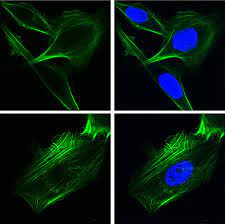
Liu, Lee, and their collaborators used confocal microscopes, which offer high-resolution 3D and 2D images and an advanced technique to capture live cell images to observe GRP78 directly in the nucleus, both lung cancer and normal cells. The researchers then employed several other methods, including biochemical analyses and mRNA knock-downs of GRP78. They used these techniques to identify the signal in GRP78, allowing it to enter nuclei and confirm that GRP78 stimulates EGFR activity when present within the heart.
The researchers then discovered what happens inside a cell once GRP78 has entered the nucleus. They used a sophisticated form of RNA sequencing to compare lung cancer cells engineered with GRP78 overexpression in the middle to cells without GRP78. This allowed them to determine which genes were affected.
Lee stated, “To our great surprise, we discovered that the genes regulated by GRP78 are mostly involved in cell migration and invasion.”
The team discovered that GRP78 binds with ID2, a cellular protein. ID2 suppresses many genes, including EGFR, necessary for cell migration. When attached to GRP78, ID2 can no longer do its job. Cancer cells are more aggressive without that suppression.
Cancer and cell biology: broad implications
New findings suggest several recent cancer treatments, such as down-regulating GPR78 activity to suppress EGFR or preventing its binding to ID2. GRP78 may also bind other proteins that are critical to cancer. This opens up a whole new research area in cancer biology. The present study focused on lung cancer cells. However, GRP78 has a similar function in other types of cancers, such as pancreatic, breast, and colon cancer.
GRP78 is a major protein of the endoplasmic membrane that can move to the nucleus. This discovery could have a wide range of implications for cell biology. Lee stated that it is possible, and even likely, that other proteins, usually located in a specific part of a cell, could migrate to a different part of the cells under stress or triggers. This would alter the behavior of the cells in many ways.
She said, “This is an entirely new concept.” “The soldier is the protein, but we are now thinking about not only the soldier but also the location of the solider.”
Lee and her group are also researching drugs that can block the expression or activity of GRP78. A study by their team suggests that small molecules inhibiting GRP78, such as YUM70, may be able to stop GRP78 in the nucleus.
Lee and Liu and Guanlin Liu, and DatP co-authored the study. Ha, both from the Department of Biochemistry and Molecular Medicine at the Keck School of Medicine of USC, Justin Wang, from the Department of Molecular Medicine at Scripps Research, and Min Xiong, from the Department of Systems Biology in the Beckman Research Institute of City of Hope.
The National Institutes of Health supported this work [R01 CA027607 and CA238029].
Disclosure: Lee is a member of the advisory board at BiPER Therapeutics. This biotechnology company develops drugs for cancer treatment.