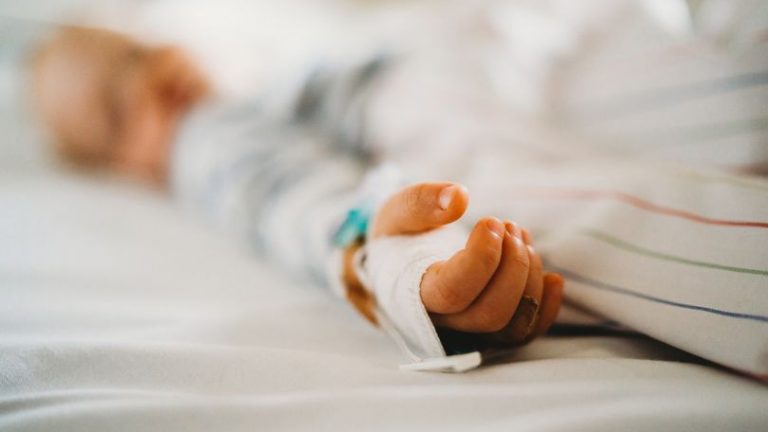
During the pandemic’s peak in 2021, many hospitalized children and teens had COVID. How many of these children were admitted to hospital for COVID was unclear. This could indicate a severe illness or a different reason, such as an accident, but they tested positive for COVID.
Doctors and scientists have argued endlessly over the severity of COVID-related severe illness among children under 18. Since the beginning, it has been known that severe diseases in children are rare. They are more common in children with serious health issues such as chronic heart conditions or suppressed immune systems. We didn’t know how much age, poverty, and ethnicity affected illness severity.
We now have answers thanks to the publication in The BMJ of our study, which examined all children and teenagers hospitalized in England with a COVID first infection between July 2020 and February 2022.
Nearly 30,000 of England’s 3.2 million children and teens who had a COVID first infection during this period were hospitalized.
Over 70% of the children we studied needed hospital treatment, in whole or in part. The study showed that the most vulnerable children were younger (especially under one year), from poorer areas, and of minority ethnicity.
Key findings
We worked with a team of data scientists and pediatricians to study child health records. We classified the hospital admissions of children into four categories:
Admissions for pediatric inflammatory multiple system syndrome (Pims), an immune reaction that occurs four to six weeks after a COVID.
The pancreatic cancer tumor is a deadly and complex solid tumor. It poses significant challenges in terms of diagnosis and treatment. The aggressiveness of the local invasion and its tendency to spread distantly are known. This causes around 227,000 deaths worldwide every year. Pancreatic cancer is a severe disease that poses many challenges. To overcome these, researchers have extensively tried innovative treatment strategies.
The research groups of Weihong Tan, Xue Qiang Wang, and the Hangzhou Institute of Medicine have used phosphorothioate modification of the backbone to improve the recognition, cellular uptake, and biostability of an aptamer that targets pancreatic carcinoma cells. This modification resulted in more efficient and safer delivery of therapeutic agents to pancreatic carcinoma.
The researchers found that the total phosphorothioate modification of the backbone significantly increased the biological stability in the serum of the aptamer. Researchers also successfully created an aptamer drug conjugate, coupling mitomycin C with the aptamer. Mitomycin C is a potent anti-tumor agent. The modified aptamer/drug conjugate showed significantly better binding and endocytosis abilities toward pancreatic cancer cell targets than the original aptamer/drug conjugate. Its toxicity toward non-targeted cells was also reduced considerably. In rats, it had a longer half-life and exhibited less toxicity.
Admissions to hospitals that are “accidental” and where COVID is not a factor.
60 % of the 21,000 hospitalized children who were either suspected or confirmed to have COVID (or Pims) or were partially caused by COVID (or both) had no other health problems.
COVID infection in hospitals was rare compared to the adult population. It accounted for only 1% of all cases (380), as opposed to 30% among adults. This likely is because children are in hospital for shorter periods than adults. This means they have less chance of contracting COVID.
Overall, COVID hospitalizations were brief, indicating that most kids recovered quickly. The average hospital stay for children and teenagers was between one and three days, but children with Pims needed more extended stays.
Nevertheless, 12.4% of the children (2,605 of 21,000) admitted due to COVID suffered from severe illness. This was determined by a Pims diagnosis (1,790 of these children) or whether they required intensive care without Pims (815).
The proportion of children and teenagers hospitalized for COVID was similar to that seen in adults with the omicron version. In adults, hospitalizations primarily caused by COVID declined significantly after the introduction of omicron. In the omicron age, there was a significant drop in the number of children requiring critical care, at least partially because of the lower cases of Pims.
Deprived children at higher risk
To better understand the factors that increase hospitalization, we compared hospital admissions as a percentage of total infections.
The number of infections recorded amongst children in the poorest areas (732,000) was lower than in the room with the highest poverty level (625,000). More than twice as many COVID-related hospitalizations (6,230 to 2,880) were in the most deprived areas.
Children from more affluent areas may have been tested less often than those in poorer areas. The higher hospital admissions among deprived children may reflect more significant exposure to infections and a higher vulnerability to severe disease.
Children with obesity, for example, were more likely to be hospitalized than children who had been infected and didn’t require hospital care. Due to socioeconomic inequality, children in deprived areas are more likely to be obese than children in less constrained zones.
The ethnic pattern was similar, with minorities being overrepresented in COVID admissions, especially in the most severe cases that required critical care.
The youngest children
All age groups recorded the lowest number of infections among babies younger than one.
Even though the COVID group only represents 5% of children under 18, babies accounted for 34% (7,115 of 21,000) of all hospitalizations.
Babys are at greater risk, as evidenced by the higher rates of hospitalizations. Compared to older children, they may also appear more ill and make parents and doctors worry when they get this infection. Children under one are known to be more susceptible to respiratory diseases such as RSV.
In the UK, babies older than six months are not offered the COVID vaccine unless they have an underlying condition. We may continue seeing hospital admissions for this age group who are unprotected from previous infections or vaccinations.