Plants can travel, even though they cannot walk. Some species have traveled vast distances for millennia using different modes of transport.
Others found new habitats as the continents they were on crashed into one another. Some went on dangerous ocean voyages, such as when coconuts washed up on new islands. Animals, including humans, carried some seeds.
They are now endemic in their region. Some may surprise you.
Native nuts: how macadamias began
In the early days of jet aircraft, flying to America required a fuel stop in Hawaii. Many Australians tried macadamias for the first and assumed that they were a local treat. Imagine their shock when they learned the truth. Hawaii’s macadamia business began in 1880 when Australia sent a few nuts.
It was no surprise to Australia’s First Nations, who have enjoyed macadamias for centuries.
There are four Macadamia species, but only two are essential for producing nuts, Macadamia M. tetraphylla. All species are members of the Proteaceae, which means they’re related to Banksias, grevilleas, and Proteas.
This family relationship reveals that the genus is an ancient evolutionary species with a 100 million-year history. Macadamias traveled with Australia when it separated from Antarctica and South America.
These subtropical trees, which are native to northern New South Wales as well as southern Queensland, can reach 25 meters in height. Even though they’re now widely farmed, they’re endangered in their natural habitat and may be further threatened due to climate change.
Oranges, lemons, and other native citrus fruits?
We love citrus fruits – lemons and oranges, probably from India’s north. DNA evidence shows that all citrus trees in the world descend from a species that originated in the foothills Himalayas. These trees spread over time, and new species developed. They eventually arrived in Australia about 8-10 million years ago.
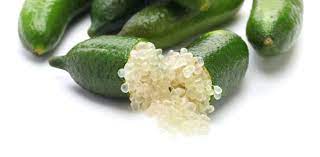
C. Australasia is a fruit with small globes that spill out like caviar. Other limes include the Australian lime Citrus australis and the desert lime C. glauca. They can have long, painful spines like many citruses. The Australian lime, while most are small shrubs or trees, can reach heights up to 20 meters.
Native raspberries
Rubus Probus has recently become a celebrity as a prickly bramble proliferating with good fruit.
You must work for the fruit, like with its blackberry relative, rubus fruticosus. It is rare to come out unscathed.
It was big news that a thornless plant was discovered and propagated. This will have a significant impact on the cultivation of native raspberries.
How did Australia get raspberries? Their ancestors probably migrated between 10 and 15 million years ago from North America to Europe, Asia, and Oceania.
It is unknown how the genus Rubus got to Australia, but the likely pathway could be a few seeds stuck on the feathers of migrating birds. This could have happened just a few hundred thousand years ago.
Native geraniums? Is it true?
My maternal grandmother had the most beautiful red geraniums growing along her fence. Family folklore said they were prize-winning cuttings at a major agricultural exhibition. I also believe this.
The garden geranium is African and arrived in Europe only in the 17th Century.
Australia also has its species of geraniums. This fact still amazes me, even after studying plants for decades.
Let’s first settle the name debate. In the 17th Century, geraniums (closely related pelargoniums) were all grouped into a single genus. Charles LeHeritier, the botanist who first described the eucalypts, divided them in the early 18th Century. Since then, there has been confusion.
It is easy to tell them apart because geraniums all have five petals of the same shape and size, while pelargoniums only have two larger and three smaller petals.
The majority of Australian native plants that are commonly called geraniums, in reality, are pelargoniums. You might have come across Pelargonium Australe – the most common species of our seven- in southern Australia.
Native orchids: From flying ducks to Queen Sheba
Orchids have a unique charm. Orchidelirium was the term coined in the 19th Century to describe the flower-crazed Europeans of the time.
Our native orchids include the Queen of Sheba, the flying duck orchid, and many others. Most of our 1800 species grow on tropical and subtropical islands.
Some orchids date to the final years of Gondwana. We also have some tropical species that must have migrated from Papua New Guinea or Indonesia recently.
This is just the beginning of our unique plants. There are native tamarinds and river mint. We also have a native Rhododendron.
Did you know that cloves are derived from a species of lilly-pilly native to Indonesia? This species is closely related to Australian lilly pills, a genus that evolved when the last fragmentation of Gondwana took place about 65 million years ago. The species rapidly expanded, and now there are over 1000 different types.