Important Points
- Earth-based experiments have shown that the clusters of lighter-charged particles formed in space’s microgravity are 50% bigger than those included on Earth.
- The ability to control the self-assembly process of colloidal particles allows the creation of novel materials with multiple applications, including photonics and drug design.
- The neutron scattering instruments Quokka & Kookaburra provide unparalleled information about the structure of clusters.
The study, conducted by a group of scientists from Nagoya City University, Japan Space Forum, Advance Engineering Services, Japan Aerospace Exploration Agency, and ANSTO, revealed a clustering of charged particles on the International Space Station. This has implications for the creation of photonic materials and better drugs.
The experiment, published by Nature – Microgravity on the ISS, determined how charged colloidal particle sub-micron sized interact in the absence and presence of Earth’s gravitation.
It is best to use colloidal particles that form diamond lattices. These clusters are crucial in the production of photonic materials. “Controlling the self-assembly of colloidal particles allows us to create a novel material which can be used for photonics, optoelectronics, and clinical diagnostics.”
Even the slightest gravitational convection and sedimentation on Earth can affect particle interactions and their arrangement within a colloid. It isn’t easy to understand the effects of charge.
Researchers selected positively and negatively-charged lighter particles as well as heavy particles. The polystyrene particle is only as rich as its aqueous medium, while titania particles weigh roughly three times more than that medium.
After their interaction, samples were immobilized with a gel to be returned to Earth and used for different experiments.
Researchers found that clusters forming in space from lighter particles are 50% bigger than those starting on Earth. This is a groundbreaking discovery, as lighter particles would not be anticipated to have such a large cluster size.
It was confirmed that an electrostatic interaction with cluster formation is possible for heavy particles such as titania, which on Earth would not be possible.
The design of the experimental setup to mix samples in space and then immobilize them after mixing was also a feat of engineering.
After JAXA chose the project, the team worked with several organizations to create a custom-built setup to mix and immobilize clusters using LED-UV lights.
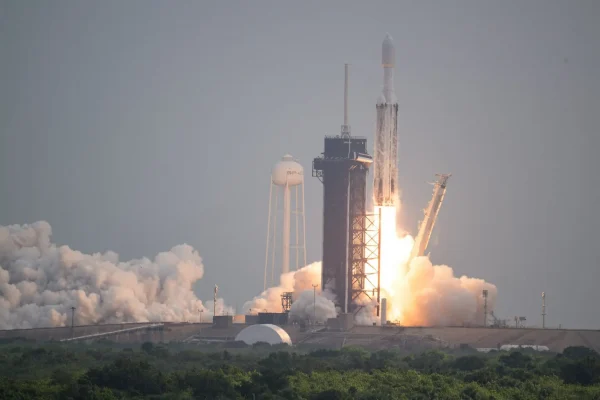
The Japanese prepared two samples; one set was sent to ISS via a Falcon rocket and Dragon SpX-19 transporter, and another was used for a ground-based experiment. The ISS crew followed the prescribed procedure for mixing and curing the samples using LED-UV light. After more than a year in space, models were returned to Earth for analysis.
A set of samples was sent to ANSTO. This is the home of two reactor-based instruments, Kookaburra – Small Angle Neutron Scattering.
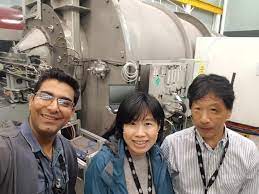
Quokka and Kookaburra instruments are unique in providing information about cluster structure, which is challenging to study using other techniques. “With contrast variations SANS and USANS, we could get information about the individual components of the clustering process,” explained Dr. Mata.
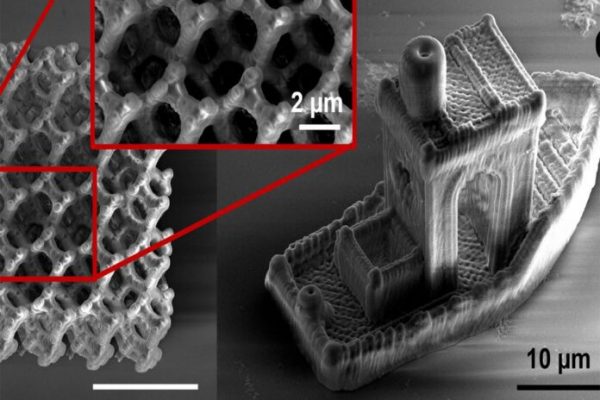
The combined data from these instruments allowed us to gain important information about the structural morphology of colloidal particles ranging from 1nm up to 10um and their charge-charge interactions. This was done without harming the crystal environment in the samples. This study includes many other techniques, including mathematical simulations and modeling.