The National Indigenous Space Academy has selected a University of Melbourne student from the First Nations community for a NASA Internship.
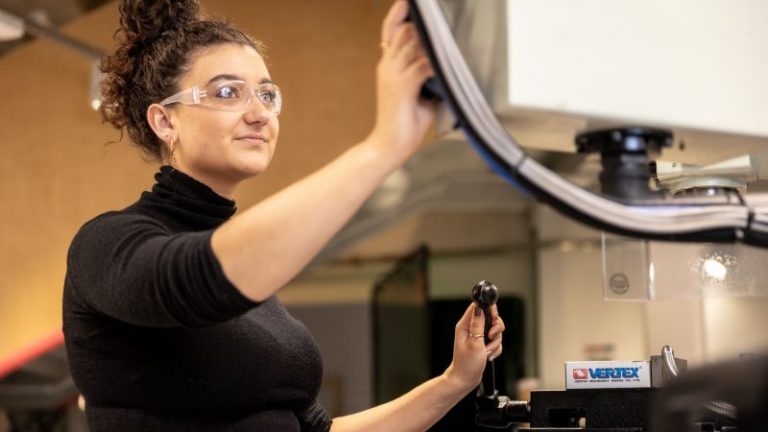
Tully Mahr is a Gundungurra girl taking a 10-week internship at NASA’s Jet Propulsion Laboratory in California. She will work with mentors to complete their outlined projects while contributing to NASA JPL’s mission.
Ms. Mahr is a Master in Mechanical Engineering student. She said this was a once-in-a-lifetime opportunity for her, as she had always wanted to pursue a career in STEM.
“My ultimate professional aspiration was to work for a space agency. I’m looking forward to meeting the people who work at JPL. “I hope to discuss with them their experiences in life and how they might influence my endeavors,” she said.
“I am also very excited to be a part of this program. It will give me an opportunity to continue advocating for STEM careers for Indigenous Australians. This is something that I am passionate about.” This is a network I will take with me for the rest of my life.
Mark Cassidy, Dean of the Faculty of Engineering and IT at the University of Melbourne congratulated Mahr for her internship.
“We are thrilled for Tully. She is a trailblazer in STEM, and the world could benefit from more talented people like herself. She inspires her colleagues greatly and will become a role model for many other Indigenous engineers and, hopefully, those with diverse backgrounds.
Next week, Ms. Mahr and four other students will head to the United States.
NISA Program Director Professor Chris Lawrence stated they would work on ongoing NASA projects, including ocean-exploring vehicles and characterizing microorganisms in the International Space Station.
He said: “It’s incredible that we empower our Indigenous youth so they can learn from the best in world, so we can foster Australian capabilities in space-research. And it would be wonderful to see NISA produce a world first Aboriginal astronaut.”
Enrico Palermo, the head of the Australian Space Agency, said that these students will be exposed to cutting-edge space missions. They will also develop knowledge and skills which they can take home to our space community.
“As we grow our space industry here in Australia, we have the opportunity to do it in a unique Australian way, by embracing the thousands of years of First Nations’ knowledge to make sense of the earth, by looking up to the skies,” Mr. Palermo stated.