UCLA Health researchers have conducted a new study that shows a novel treatment can be effective for most patients who suffer from major depression symptoms, even after several failed antidepressant medications. The treatment of repetitive transcranial magnet stimulation (rTMS) may be more effective than previous findings, and symptoms can begin to improve as soon as one week.
Researchers at UCLA’s Semel Institute’s Neuromodulation Division analyzed the results of hundreds of UCLA Health patients treated with rTMS, which uses a magnetic field to “rewire” brain circuits. According to a new study published in Psychiatry research this week, 54% of patients showed clinical improvement (at least a 50 percent improvement) when assessed using multiple depression rating scales.
We have a unique treatment approach for rTMS at UCLA, said Dr. Michael K. Leuchter. He is a senior resident in psychiatry at the Jane and Terry Semel Institute of Neuroscience and Human Behavior. In our “precision TMS” model, patients are seen by a psychiatrist for every treatment, and symptoms are measured weekly using multiple rating scales.
UCLA researchers were able to evaluate treatment benefits with greater accuracy and fidelity than in previous studies that used fewer measurement scales.
Leuchter explained that the majority of patients improved significantly after undergoing treatment. The most interesting thing is that patients report improvement in just a week after starting the treatment. This is despite the fact that the treatment continues for weeks.
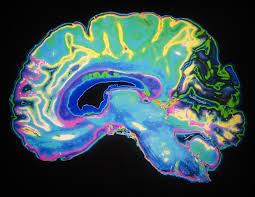
TMS is a technique that uses magnetic fields to stimulate the brain circuits involved in mood regulation. Patients receive treatment sessions of 20-30 minutes five days a week for six to eight weeks.
Compared to other antidepressants, rTMS has a relatively short history. The U.S. Food and Drug Administration approved it for the treatment of major depression that is resistant to medication in 2008.
Prior to this, the effectiveness of rTMS was observed as being quite variable. Response rates reported ranged from 30-60%. Researchers at UCLA are working to understand this variability better and to predict which patients will benefit most from the treatment.
Leuchter, along with his UCLA colleagues, studied the results of 708 TMS patients over six weeks using four commonly used depression scales. The researchers found that the depression scales used by doctors to evaluate the effectiveness of treatment may be a major factor in this variability. Researchers found that across all four scales, 54% of patients had a significant reaction on at least one scale. Leuchter says that if only one rating scale is used, it’s possible to miss up to a quarter of positive treatment responses.
Leuchter explained that using multiple scales instead of one allowed us to detect better the effectiveness of the rTMS treatments for the different types of depression.
Also, the early improvements that a patient reports within five to ten treatments are significant predictors of how well they will respond throughout their treatment. Leuchter explained that this information could be used to help doctors decide whether or not they should modify their treatment approach.