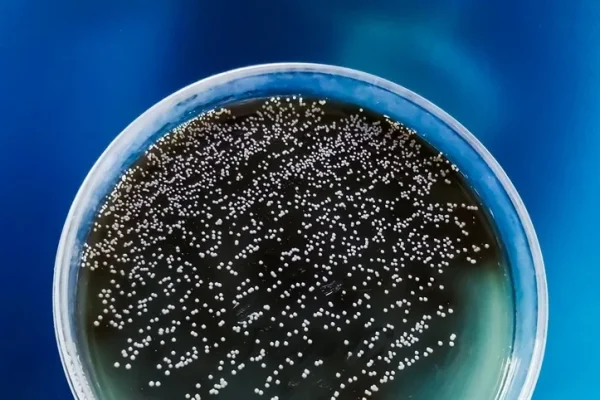
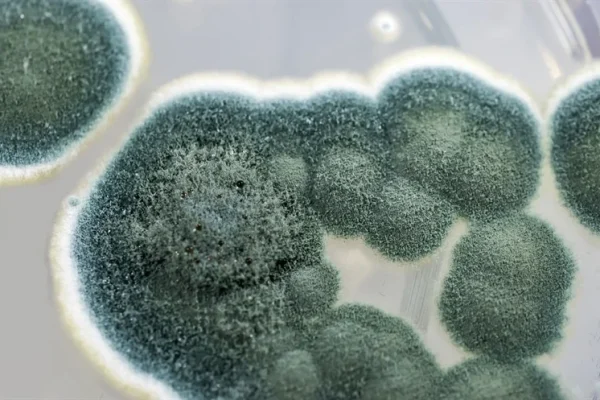
What began as a single, invisible cell in 2018 has evolved into an organism with many cells about the size and shape of a fly.
A study currently underway on brewer’s yeast (Saccharomyces Cerevisiae), which has mutated so it remains attached in clusters, as snowflake yeast’, shows what can happen after thousands of generations.
Researchers at the Georgia Institute of Technology selected five populations of the fastest-growing yeast clusters and then cultivated them generation after generation. The organism they created contained over half a billion clonal cellular – 20,000-fold larger than its ancestor.
This is a unique example of multicellular evolution.
William Ratcliff, evolutionary biologist at Georgia Tech, explains that by determining the evolution of single-celled organisms, we can determine how they developed into more complex multicellular organisms. We can also study the process as it unfolds.
Few people know how cells that looked the same and behaved similarly evolved into multicellular organisms with specialized tissue capable of coordinated action about two to three billion years ago.
Experts can now retell the story of snowflakes by using experiments on yeast.
Researchers hope to continue the study for several decades. It is called Multicellularity Long-Term Evolution Experiment. After 3,000 generations, the first significant discoveries have been made.
Researchers claim that individual populations of yeast have already turned substances “weaker and weaker than gelatin” into substances “with the strength, toughness, and durability of wood.”
Ozan Bozdag, the evolutionary biologist, explains that “we discovered that there was an entirely new physical mechanism which allowed the groups to grow to such a very, very large scale.”
First, the yeast cells evolved larger branches in the experiments, reducing the overall density.
The branches then tangled together, forming a cluster with a consistency similar to modern gels.
This new structure ultimately made the organism 10000 times more potent than its single-cell ancestor—no longer a mere snowflake.
The yeast branches had become entangled,” explained. “The cluster cells developed vine-like behaviors, wrapping around one another and strengthening the whole structure.”
Oxygen’s role as a limiter of evolutionary progress was another important discovery.
It was in short supply during Earth’s early years. Multicellular life forms are believed to have only taken off after a particular type of bacteria breathed life into the atmosphere about a billion years ago.
The lab evolution of snowflake yeast supports the idea oxygen was a major constraint for the first multicellular forms on Earth. Only populations of yeast that did not rely on oxygen for energy production could evolve to such enormous size in experiments.
The cost of growing larger was increased for yeast clusters that needed oxygen.
Scientists claim these findings underscore “the crucial role of oxygen levels in multicellular growth.”
“I am excited about having a model system that allows us to evolve multicellular life early over thousands of years, harnessing modern science’s awesome power,” Ratcliff says.
“In principle, we understand everything, from the evolution of cell biology to the biophysical characteristics that are directly selected.”
What happens to this yeast over the next few years will be fascinating.