A team of scientists at The University of Western Australia have embarked on an innovative study of flowering plant species that flourished about 125 million years ago.
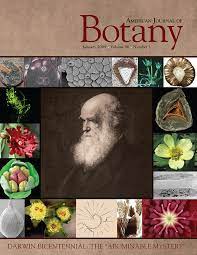
The ‘abominable mysteries’ is a puzzle that the English naturalists and biologists were fascinated by but couldn’t fully explain in his lifetime. It was the rapid growth and diversification of flowering plants.
Darwin recognized that flowering plants emerged relatively late in Earth’s history. However, they quickly became dominant once they appeared, occupying different habitats and displaying remarkable diversity.
He was unable, during his lifetime, to solve the mystery. However, he proposed many hypotheses, such as that insects play a part in pollination and co-evolutionary relations.
The UWA study was published in the Earth Science Reviews and focused on the pollen produced in the Arabian Plate. This area is known for its rich diversity of floral species during the early stages of flowering plant evolution.
Hani Boukhamsin is the study’s lead author, a PhD student at UWA’s Centre of Energy and Climate Geoscience, School of Earth Sciences. Researchers wanted to explore the relationship between the geography of the region and the diversity of flowering plant species during this time.
Boukhamsin explained that “we found that islands and archipelagos on the Arabian Plate played an important role in the speciation of flowering plant species and proposed two models for explaining this sudden proliferation of flowering plant species: the insular and the wet centers of diversification.”
According to the insular models, migratory birds and flying reptiles are vital in dispersing flowering plant seeds to the islands. Tiny seeds stick to their feet and skin or are carried in their digestive systems.
The second model suggests that the lakes and waterbodies along the Arabian coastline acted as “wet islands” in a terrestrial environment, with these areas being colonized by aquatic flowers and influenced by sea level changes and serving as a continuous source of diversity for flowering plant species.
Dr. Daniel Peyrot from the UWA School of Earth Sciences said that the research highlighted the importance of analyzing pollen and fossilized spores, a field known as palynology, to understand the history of plants and their propagation on Earth.
Peyrot stated that scientists could gain valuable insight into the evolution and spread of plants over time by studying ancient pollen samples.