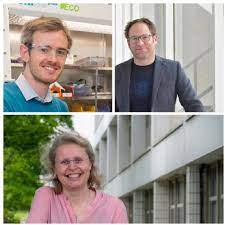
The Royal Society of Chemistry has recognized three world-class scientists from the University of Warwick for their outstanding research.
Dr. Sebastian Pike has been named the Royal Society of Chemistry Sir Edward Frankland Prize winner. Dr. Adrian Chaplin was awarded the Royal Society of Chemistry Sir Geoffrey Wilkinson Prize. Professor Julie Macpherson won the Royal Society of Chemistry Tilden Prize.
Sir Edward Frankland’s Prize was awarded to Dr. Sebastian Pike for his research on the photochemistry and synthesis of metal-oxo molecules and their application as precursors of functional materials. Dr. Pike received a medal, PS3,000, and also a prize.
The RSC has a long list of previous winners, 60 of which have won Nobel Prizes. This includes Carolyn Bertozzi, laureate of the 2022 Nobel Prize, and John B Goodenough, laureate of the 2019 Nobel Prize.
Metal oxides are used for a variety of modern applications. They can be found in sun creams, paints, self-cleaning glass, and surfaces that fight bacteria on next-generation medical equipment. Metal oxides are used in various modern applications, from sun creams and colors to self-cleaning windows of the latest technology to antibacterial surfaces for next-generation medical devices.
When Dr. Pike received the award, he said: “I am surprised and thrilled! This is a great incentive to continue with our ideas.”
Pike’s work focuses on molecular versions and how to optimize their properties by tuning their composition, size, and surface chemistry.
These molecules can act as small reactive centers, which absorb light and catalyze chemical reactions. They are easier to understand and study because of their atomically precise structures.
Designing next-generation materials capable of efficiently using solar energy to create fuels and useful chemical compounds will be crucial.
Adrian Chaplin, meanwhile, won the Sir Geoffrey Wilkinson Prize in recognition of his contributions to organometallic chemical chemistry through the creative use of pincer ligands. He received PS3,000 as well as a medal.
After receiving the award, Dr. Chaplin stated: “I feel honored to be awarded this prestigious RSC prize which recognizes the work done by my team here at Warwick over the last decade.
“Challenges drive our work but are largely fundamental. I am thrilled that this basic science has been acknowledged because it is crucial to support long-term technological applications that are not always predictable. I look forward to this opportunity to discuss our recent findings at universities across the UK.”
Dr. Chaplin’s research focuses on transition metal molecular compounds and how they can be applied in chemical synthesis. His research group is focused on the activation of alkanes and nitrous dioxide.
It isn’t easy to find reagents that are both abundant and energy-efficient. The greenhouse gases methane and nitrogen oxide are also essential and can be used to manufacture chemicals.
Professor Julie Macpherson has won the Tilden prize for her pioneering work in electrochemistry, catalysis and electroanalysis, imaging and sensor systems, material characterization, and nanostructure electrochemical synthesis.
The Tilden Award is a great honor. This award is for me and all of the outstanding group members I’ve had the pleasure to collaborate with in the past and present,” said she.
It would not have been possible without these scientists’ passion, dedication, and hard work to uncover new science.
Professor Macpherson’s research focuses on using carbon-based materials for electrochemical systems in various applications, including environmental monitoring and energy storage. Lab-grown boron-doped diamond (BDD), an electrochemically active diamond, is one of the materials used.
BDD’s unique and broad-range properties make it a powerful sensor that can be used to determine the health of rivers and oceans.
BDD can also produce highly oxidizing species helpful in fighting viruses and bacteria and cleaning wastewater systems. Its non-corrosive properties make it a suitable replacement for graphite materials prone to corrosion in fuel cells.
Dr. Helen Pain, chief executive of the Royal Society of Chemistry, said:
“The chemical sciences have a leading role in tackling our world’s challenges. Chemical scientists’ work is crucial to our future, from fundamental chemistry to the most cutting-edge innovations.
The RSC’s prize program allows us to celebrate and reflect on the brilliant individuals and teams who enrich our knowledge and understanding and bring new ideas and technology that benefit society. “We’re proud to recognize the contributions of our award winners today.”
For over 150 years, the Royal Society of Chemistry has awarded prizes to recognize excellence in chemical sciences. The Royal Society of Chemistry announced in 2019 the most significant overhaul of its portfolio to better reflect the modern scientific work and cultural environment.
The Research and Innovation Prizes recognize the achievements of brilliant individuals in industry and academia. There are prizes for people at different stages of their careers in general chemistry, for people working in specific fields, and also for interdisciplinary and specific role prizes.