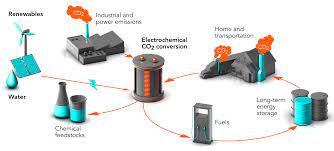
Carbon dioxide (CO2) is a greenhouse gas that is released by a variety of human activities. Scientists and policymakers worldwide are constantly exploring new ways to reduce CO2 emissions and convert them into proper forms to lower humanity’s carbon footprint. The electrochemical conversion of CO2 into other carbonaceous compounds like alcohols, hydrocarbons, and carbon monoxide has received considerable attention.
In this context, environmental researchers at Doshisha University in Japan, led by Prof. Takuya GOTO, published a study on July 10, 2023, that showed a method to convert CO2 using molten sodium through sustainable electrochemistry. The study was published online on April 22, 2023, and included contributions by Dr. Yuta Suzuka from the Harris Science Research Institute and M. Tsubasa Totakeda from the Department of Science of Environment and Mathematical Modeling.
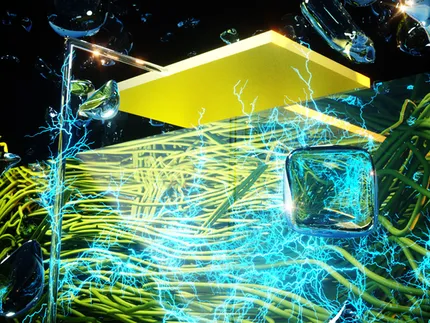
The research team used a LiCl-KCl melting to convert CO2 into MWCNT. The molten sodium salts were saturated in CO2, and a nickel substrate (Ni) was used as an electrode. At the end of the process, the CO2 supplied was electrochemically transformed into solid carbon. This green conversion was achieved via a reduction at the interface of Ni electrode/LiCl – KCl melt/CO 2.
The electrochemical reduction CO 2 was studied on a Ni-based electrode in LiCl KCl melts at 723 K. A super meniscus formed under high polarization at the interface between the Ni electrode/LiCl – KCl melt/CO 2, where the electrochemical reduction from CO 2 into solid carbon proceeded. The electrochemical method was used to obtain stable carbon in the wetted surface of the Ni electrode and the bulk molten sodium.
The subsequent characterization of the electrode-deposited carbon using electron microscope techniques and elemental analyses revealed that the obtained material consisted of commercially viable MWCNTs that were between 30 -50 nm in size. The team increased the reaction time and varied the voltage applied, resulting in noticeable changes to the MWCNTs. The height of MWCNTs generated increased when the electrolysis time increased from 10 minutes to 180 minutes. We studied the effect of electrolytic time and applied potential on the crystallinity and morphology of the carbon electrodeposited. We developed a model based on our experimental findings to explain the formation of MWCNTs onto the Ni electrode, says Prof. Goto.
Three stages are described for the proposed model of generating MWCNTs using CO2. In the first stage, CO2 is reduced to carbon atoms by the interface of Ni/LiCl/KCl melt and CO2. In the second stage, the carbon atoms electrodeposited on the Ni electrode form Ni-C (like NiC). Lastly, when the limit for carbon solubility in NiC compounds is reached, the MWCNTs with cylindrical shape grow out of the NiC compounds formed during the second phase.
The study concludes by identifying a novel method for converting CO2 into commercially valuable carbonaceous materials. The electrochemical process is also environmentally friendly, as it does not use fossil fuels. The use of high-temperature molten sodium is also unique, as it allows the conversion of CO2 into MWCNTs.
“Our results show that CO2 can easily be converted into functional carbonaceous materials. This technique, which combines non-consumable oxygen evolving anodes with this technique, can help develop a carbon recycling system that helps solve global environmental issues and plays a key role in the carbon pricing economy. This material production process that does not rely on fossil fuels will contribute to a sustainable society within the next few years,” says an optimistic Professor, Goto.